Data and Variables
Lecture 2
2024-05-16
Some logistics
Reminders
- Drop/add ends tomorrow
- Class does not meet Fridays–next meeting is Monday
- The course syllabus is online.
Slides
- Will be available on the website. Use your arrow keys to navigate.
Data and Variables
Sociological data
Sociological data: Qualitative
Interpretations, stories, narratives, observations
Uses:
- deep understanding of particular cases, theory building, where measurement doesn’t work
Methods:
- interviews, ethnographies, content analysis, image analysis, etc
Sociological data: Quantitative (this class)
Measured quantities. Counts, closed-ended surveys, proportions, outcomes.
Uses:
- Describing measurable things about the world, theory testing
Methods/sources:
- Surveys, administrative data, digital trace data, etc
EADA data (from last time)
- Equity in Athletics Data Analysis
- Participation, staffing, revenues, and expenditures for men’s and women’s college sports teams
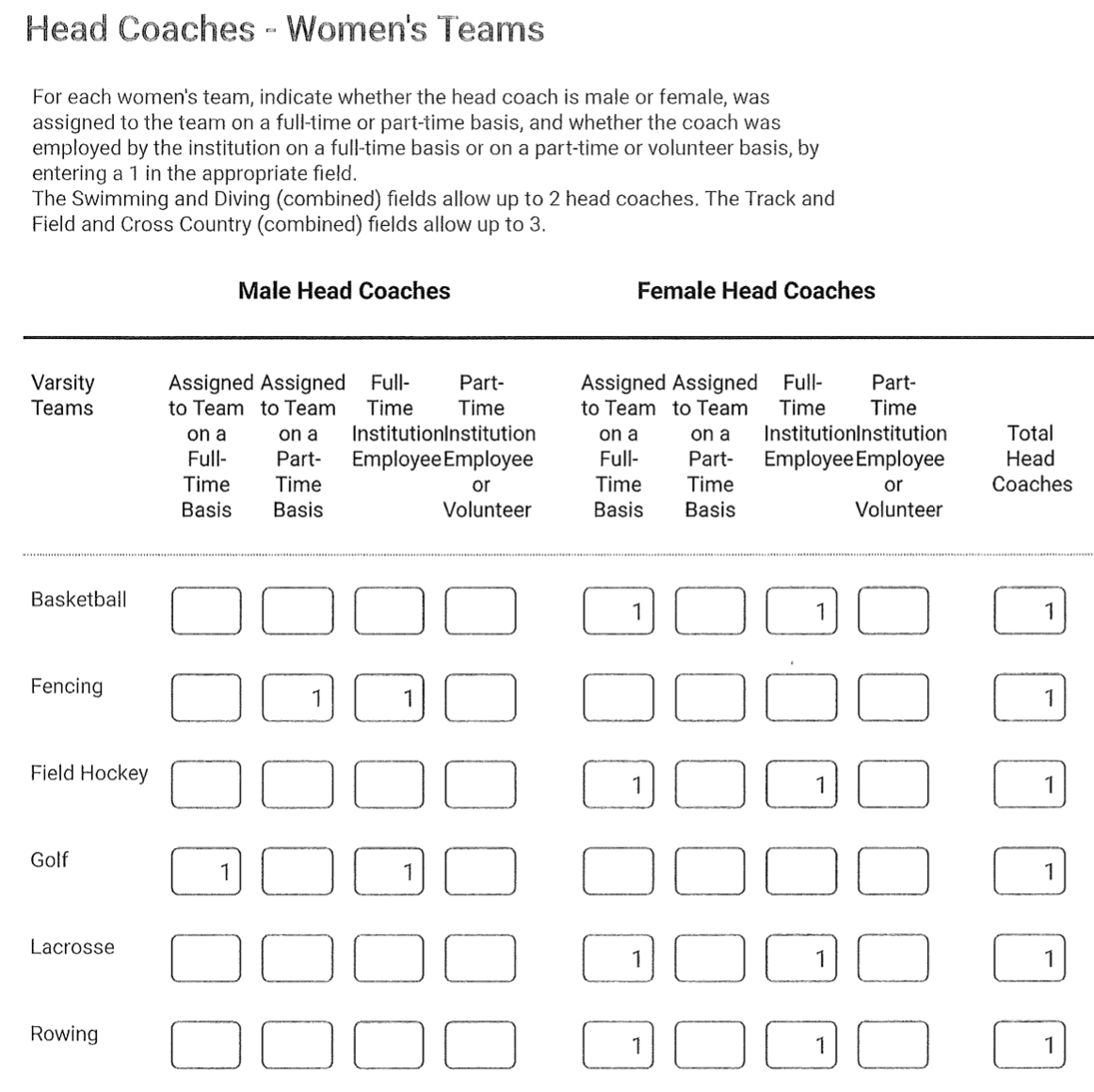
Step 1: Data -> data frame
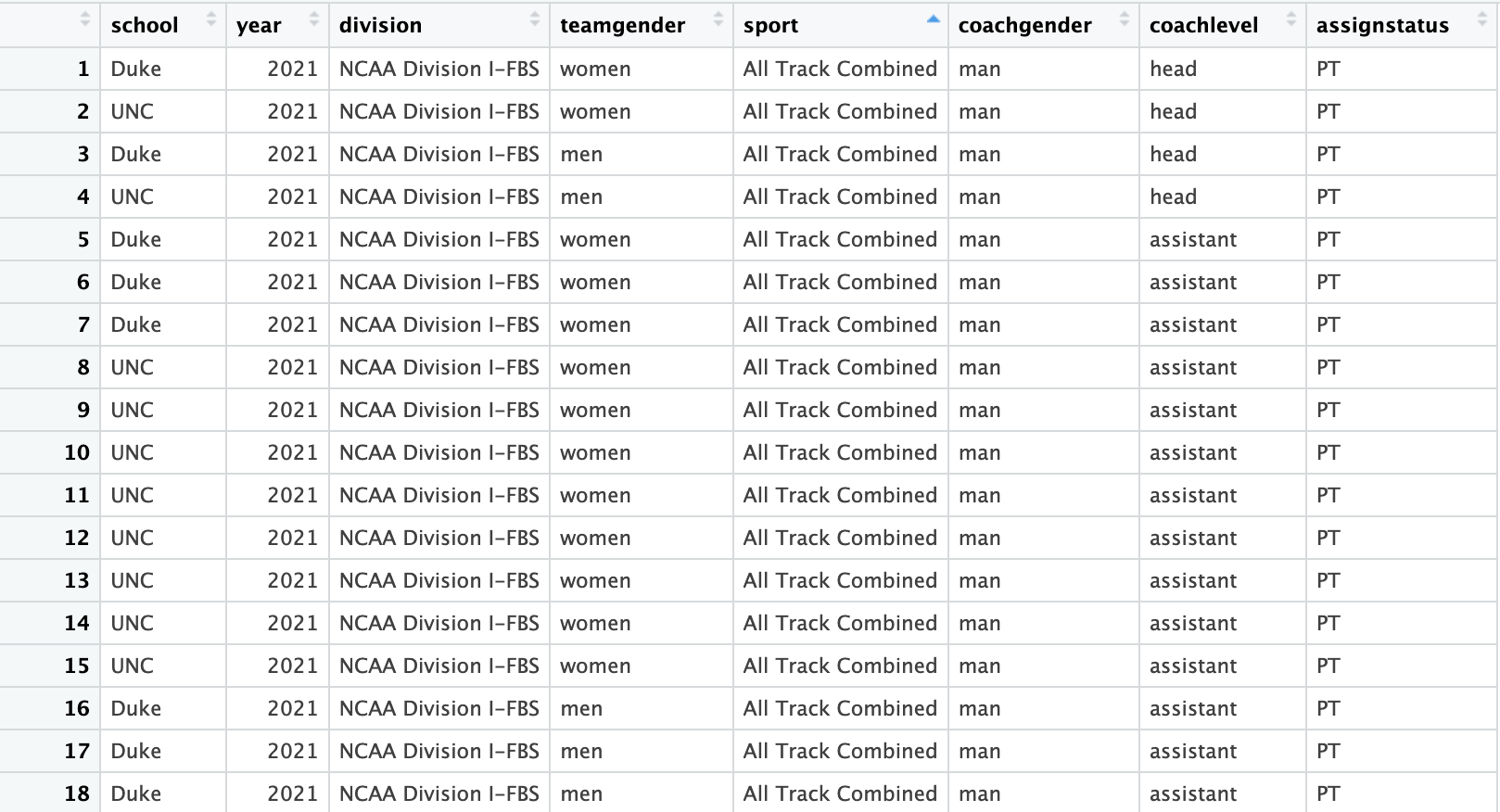
Observations
- Each instance that you observe data about (often 1 observation = 1 person, but not always)
- Rows in your data frame
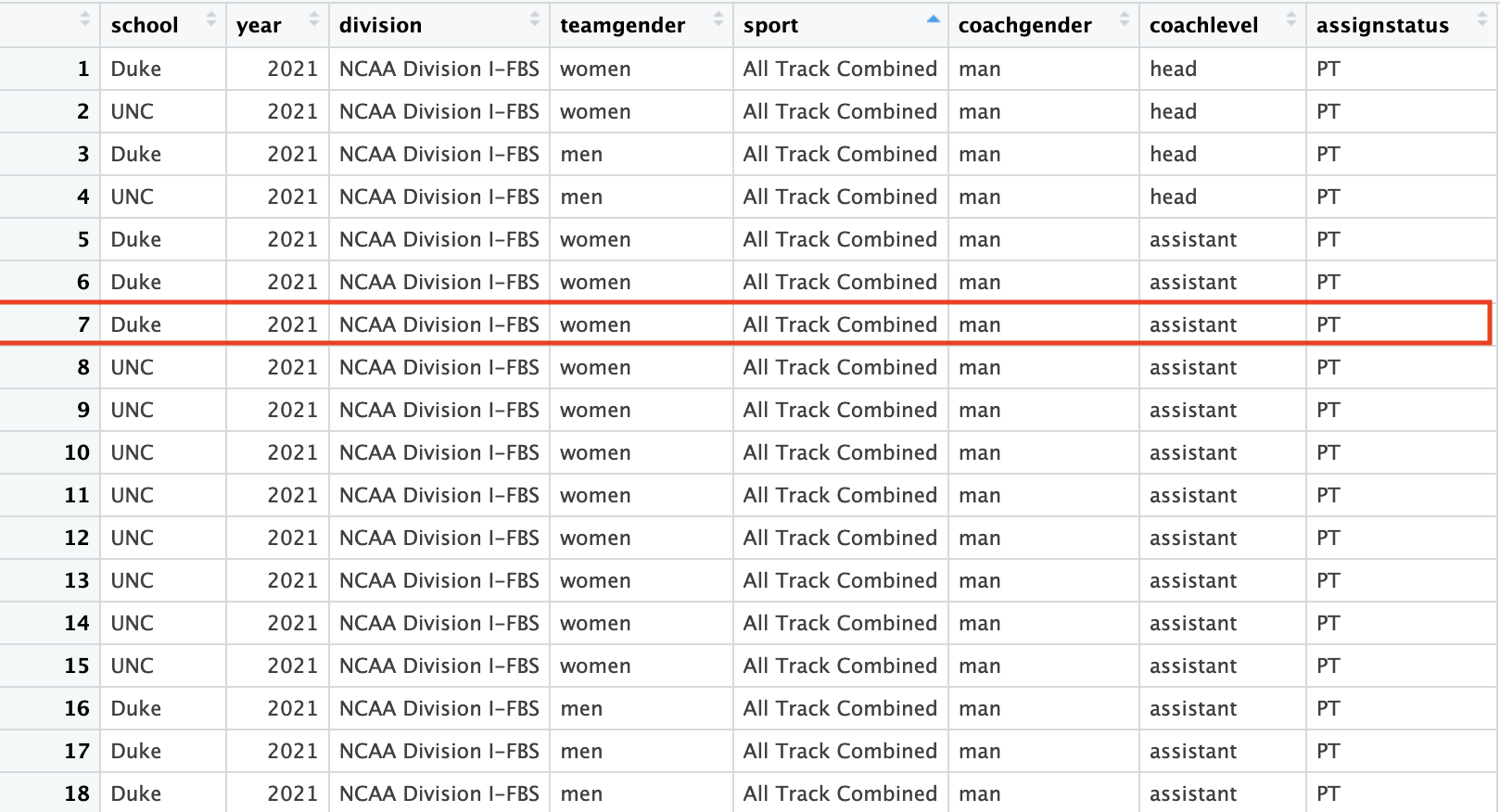
Variables
- Aspects that can be different for different cases
- Columns in your data frame
- Values the variable can take are called response options (especially in the context of surveys)
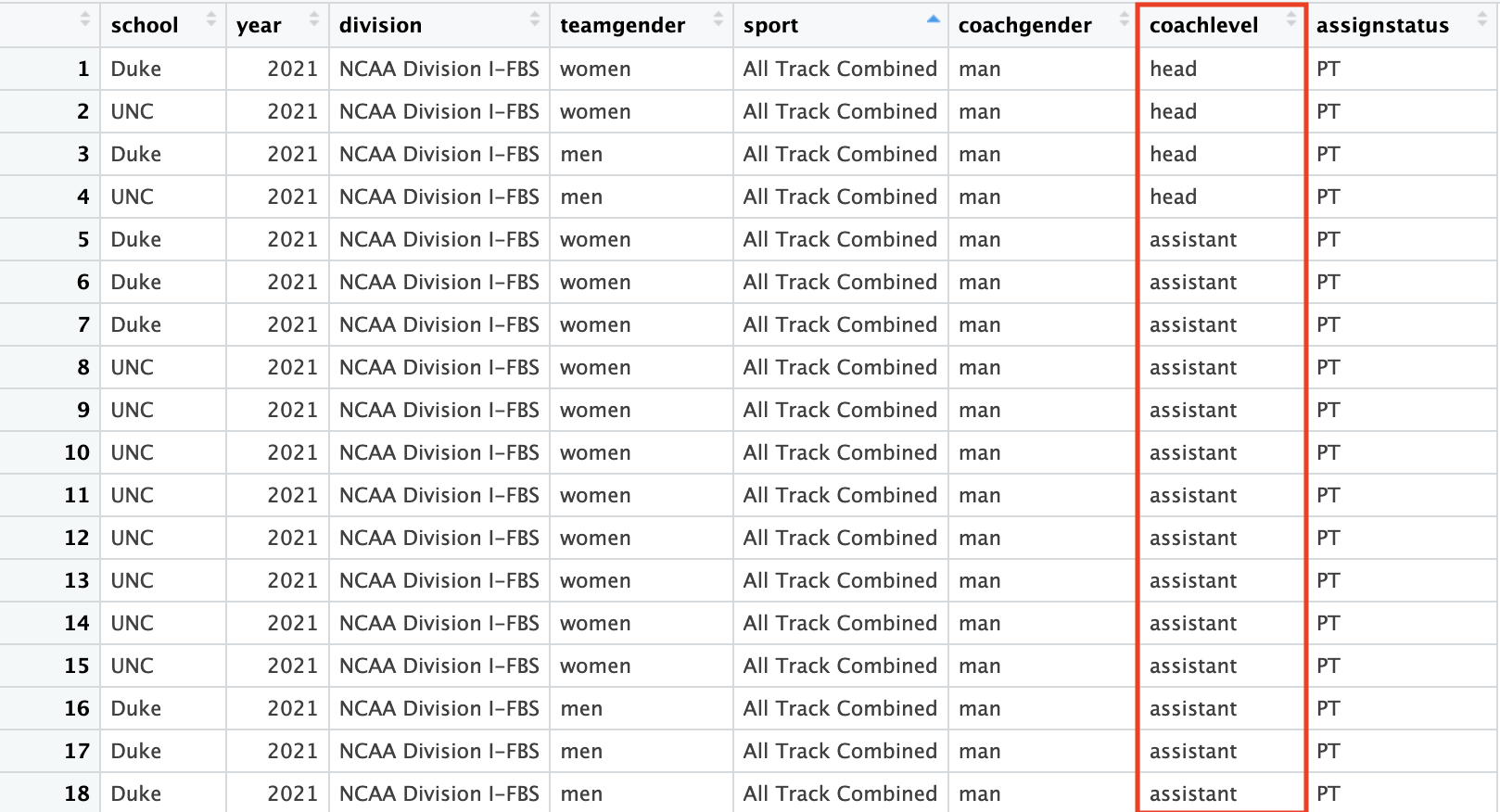
Types of variables
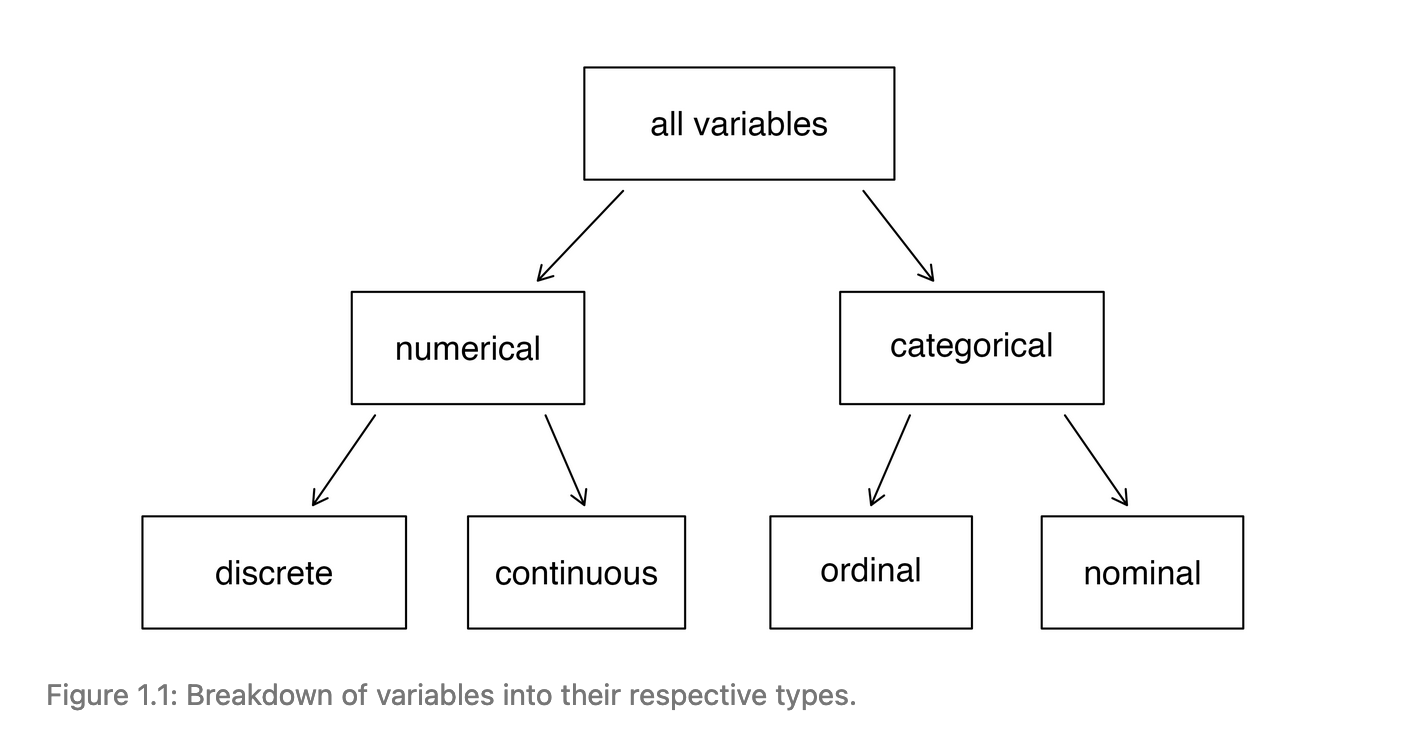
Categorical
- Response options have names, not numbers
- Mathematical operations (addition, subtraction, division) do not make sense
- The book treats these subtypes as the same–we will too for math’s sake, but sometimes the difference does play into interpretations
Categorical: Nominal
- Simple categories
- Can’t say one category is “bigger” or “smaller” than another
- Examples: gender identity, race, ethnicity, economic sector
Categorical: Ordinal
- You can say that one is “bigger” or “more” than another
- Examples: education (no hs diploma, hs diploma, some college, 2 year degree, 4 year degree, advanced degree), income (low, middle, high)
Categorical: Binary
- Has just two levels: yes/no; present/not present
- Examples: has college degree/does not have college degree; not ever married/married
Numeric
- Response options are numbers where the values are meaningful (ie, not arbitrary)
- Mathematical operations (addition, subtraction, etc) make sense
Numeric: Continuous
- Any value within a range is possible–decimals are fine
- Examples: Temperature, height, elevation, stock price
Numeric: Discrete
- Only certain values (usually round numbers) “make sense” and are used
- Examples: Age, years of education
Exercise: EADA data variable types
- Determine the type of each variable in this data set.
For next time:
- Read the syllabus, if you haven’t already
- Email me your exercise answers